
Merryl's Learning Journey

A Collection of Readings

Pages

  • Home

Sunday, 30 October 2016

Why do we do that?

http://afhogan.com/why-do-we-do-that/

Posted by Anonymous at 00:02 No comments:
Email ThisBlogThis!Share to XShare to FacebookShare to Pinterest

Saturday, 29 October 2016

Teach with your mouth shut

Teach with your Mouth Shut

Teaching With Your Mouth Shut
OPINION
Professional DevelopmentLearning Strategies

Teaching With Your Mouth Shut

By Stefany BolañosOct 15, 2016
Image Credit: JrCasas / Shutterstock.com
When someone asks you what do you for a living and your answer is “teaching,” people generally assume you’re in a position of power. Why wouldn’t they? When we think of teachers, we picture them standing in front of their students, giving instructions and maintaining order. Teachers dictate rules, answer questions, have command over their material, and captivate their students with brilliant insights and advanced knowledge. When you’re a teacher, students take you seriously. They admire and respect you. (Or, you hope they do!)
While being in this position of power can feel gratifying, it doesn’t always work. When this school year started, I decided to stop “teaching” my 10th graders in the traditional sense, and find a new way to educate my students.

Why Teaching Fails

“The teacher refuses to govern the students in their inquiry because he wants the students to learn how to govern themselves.” — Donald Finkel
Our assumptions regarding what a “good” teacher is may very well be wrong. In his book “ Teaching with Your Mouth Shut,” Donald L. Finkel describes teachers who “carefully and clearly tell students something they did not previously know.” This kind of teaching, he says, is simply “telling.”
What is wrong with teaching through telling? After all, hasn’t it been a very common teaching model for decades?
According to Finkel, the main drawback of teaching through telling is that reflection is done by the teacher, not by the student. Knowledge is transmitted—often in unstimulating fashion—as specific bits of information, which are notoriously hard to remember and often provided without context. When students are exposed to material they haven’t learned about before, they fill in the gaps with their prejudices and opinions. As teachers, we should want our students to acquire a deeper knowledge of a given subject matter, not just memorize facts and figures.

What I Gained by Refusing to Teach

The alternative to teaching through telling is what Finkel calls “teaching with your mouth shut.” In this model, teachers step back and become silent observers, rather than putting on a performance like an actor in a play. Instead of being “carriers of knowledge,” we become humble enough to say “I don’t know.”
Instead of tightly controlling the learning process, we allow students to find their own solutions, thus “creating circumstances that lead to significant learning in others.” Refusing to teach through telling is also refusing to accept the traditional view of what being an educator means.
Starting from the first class I taught this semester, I made a deliberate effort to step back from my role as “teacher” in the classroom. At first it was very strange for my students. They were expecting an authority figure, someone to tell them specifically what to do. But I did the opposite: I gave them general instructions for a class project, including some milestones and (flexible) deadlines, and then set the students free to complete the project on their own.
The first week, when a student asked for the “rules” surrounding the project, I simply repeated my instructions: “The only ‘rule’ is that we’re here to record a podcast on the future of technology. It is up to you to decide what you want to learn and how. I will listen to your ideas and help you when I consider it appropriate, but don’t expect me to say much.”

A Week Later...

Students started to feel like they “owned” the class. It struck me how they began listening intently and responding to each other. They asked questions and made discoveries on their own, and learned to work autonomously without relying on my guidance. The best part of all of this is that they developed a voice of their own.
But it wasn’t perfect. Students struggled with uncertainty, taking the initiative, being tolerant, and even having a certain respect for silence (because at first, we had a lot of that!) But they learned, and in the end, they gained a sense of ownership not only of the project, but of the class, since they alone were responsible for it.

How to Teach with Your Mouth ‘Shut’

1. Create a classroom environment that invites student participation.
  • Rethink the physical layout of the classroom—it really does matter!
  • Set ground rules regarding communication.
  • Try “feedforward” instead of feedback.
2. Make a distinction between power and authority.
  • Power is the ability to make things happen whereas authority describes your relationship with your students. Give your students power in regards to their learning while maintaining your authority.
3. Listen intently and don’t intervene.
  • You’ll want to jump in and give instructions or advice, but resist the temptation. (I know how hard this is, believe me!) You’ll be surprised by what your students can do if you take a step back and let them control the learning process.
4. Use software that facilitates collaboration.
  • Find an online tool that allows students to learn with others. Choose one that has the flexibility that students need to develop their own processes, while making it easy for you to track their progress.
Rather than being a great actor and stealing the show, stepping from the front to the back of the classroom has been far more rewarding to me. My students are now collaborating with others, asking questions, and finding their own answers.
Best of all, they are finally learning.

Stefany Bolaños (@_StefyB) is part of the team at Learnhub. She also teaches an economics course at Universidad Francisco Marroquín in Guatemala, has published three children's books, and previously started a tutoring business.

Professional Development

The 4-Letter Word You Need to Know—and How Teachers and Administrators Can Embrace Data Literacy

Oct 28, 2016
Personalized Learning

Merit Prep Personalizes Learning One Playlist at a Time

Oct 25, 2016
Project-Based Learning

How to Integrate Green Screens Into Any Classroom

Oct 19, 2016
School Models

AltSchool Announces 2017 Partner Schools, Gives Insight Into Monetization

Oct 18, 2016
STAY UP TO DATE ON EDTECH. Sign up to have top stories delivered weekly.
SUBSCRIBE NOW

WHO WE ARE

EdSurge helps schools find, select and use the right technology to support all learners.
Followers
85,030
Teacher Reviews
12,738

WHAT WE DO

  • News
  • Summits
  • Jobs
  • HigherEd
  • Product Reviews
  • Research
  • Concierge

ABOUT

  • About EdSurge
  • Media
  • Advertising
  • Careers
  • Team

SUPPORT

  • Ethics Statement
  • Privacy Policy
  • Terms of Use
  • FAQ
© 2011-2016 EdSurge Inc. All rights reserved. Every student succeeds.
Posted by Anonymous at 23:59 No comments:
Email ThisBlogThis!Share to XShare to FacebookShare to Pinterest
Labels: Teach with your mouth shut

Thursday, 11 August 2016

WHAT DO YOU WANT TO BE WHEN YOU GROW UP? Home / 2016 / August / Commentary / What do you want to be when you grow up? BUILDING A FUTURE-FOCUSED GRADUATE PORTFOLIO

Core Education

http://blog.core-ed.org/blog/2016/08/what-do-you-want-to-be-when-you-grow-up.html?utm_source=feedburner&utm_medium=feed&utm_campaign=Feed%3A+coreeducationblog+%28The+CORE+Education+Blog%29


WHAT DO YOU WANT TO BE WHEN YOU GROW UP?

Home
 
/
 
2016
 
/
 
August
 
/
 
Commentary
 
/
 
What do you want to be when you grow up?

BUILDING A FUTURE-FOCUSED GRADUATE PORTFOLIO — A SECONDARY SCHOOL PERSPECTIVE

“When I was 5 years old, my mother always told me that happiness was the key to life. When I went to school, they asked me what I wanted to be when I grew up. I wrote down ‘happy’. They told me I didn’t understand the assignment, and I told them they didn’t understand life.”John Lennon
As a secondary school learner how many times were you asked, “What do you want to do when you leave school?” Can you remember what your reaction was? Did it:
  1. irritate you
  2. motivate you
  3. confuse you
  4. make you anxious, or
  5. all of the above?

The need to demonstrate dispositional competencies

graduate skillsThroughout their time at secondary school, learners are choosing subjects and working towards qualifications that, to some extent, guide them towards future employment. The decisions they make, with input from teachers, parents, and peers is generally confined to the academic qualifications they will require to realise their future goals. Evidence suggests that, in order for graduates from our secondary schools to be competitive in a global market for further education and employment, they should be able to demonstrate, not only their academic achievements but also their dispositional competencies.
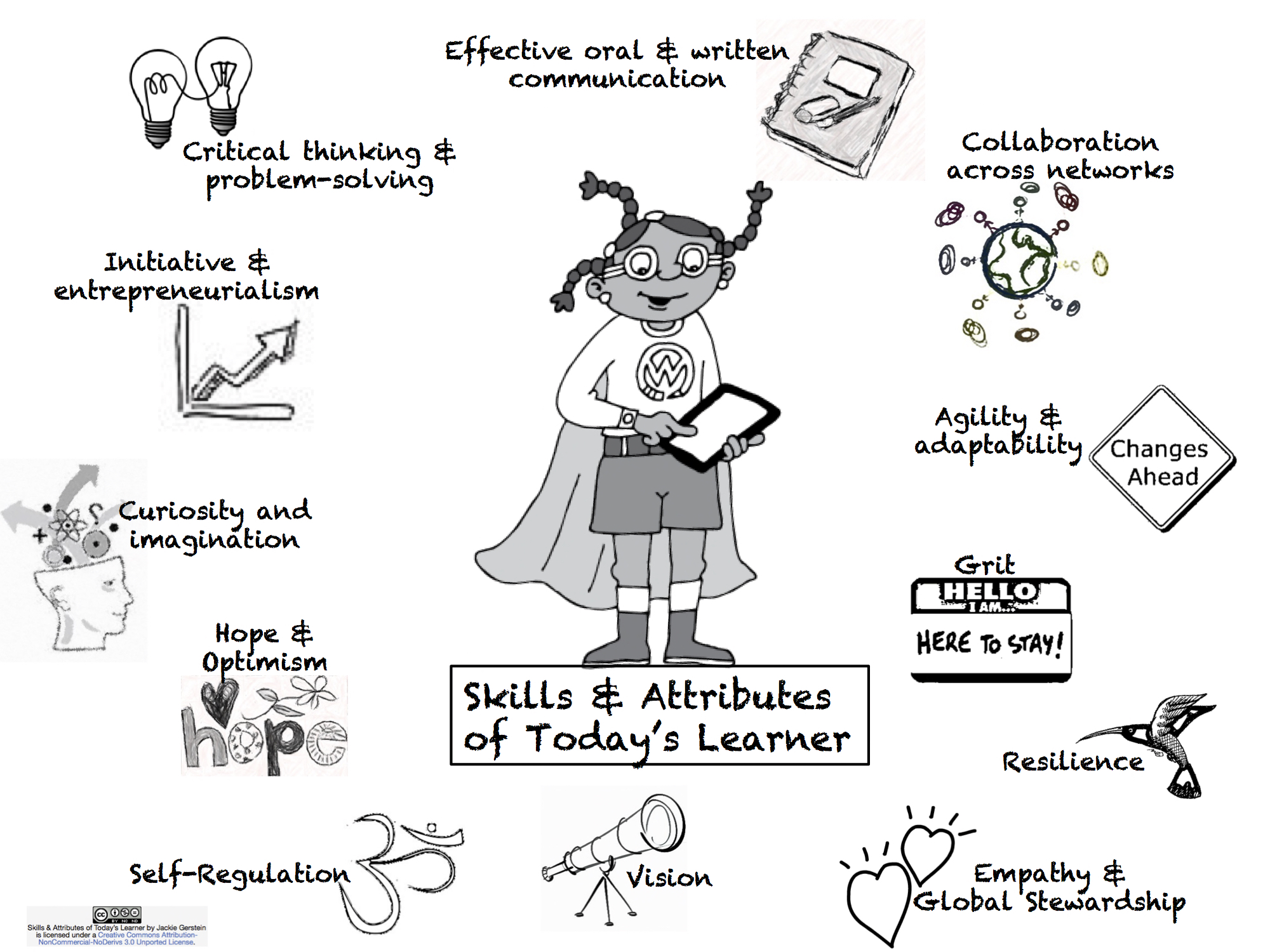
We know what a future-orientated learner looks like. We know the dispositions, skills, and attributes 1 valued by employers 2. We know that growth economies need people with entrepreneurial skills to enable them to create their own jobs and jobs for others. The New Zealand Curriculum lists the key competencies needed to ‘live, learn, work, and contribute as active members of their communities’ 3. The question, then, is:
How can schools empower and support learners to work towards and build evidence that they have these competencies, skills and dispositions in the same way that schools support them to acquire their evidence of academic achievement?
Is it enough for school leavers to have only a record of their academic results when they leave school? Where is the evidence that they have other skills that we know are essential? Are we expecting too much of employers to be willing to ‘read between the lines’ of a Record of Learning (RoL)?

Limitations with leavers’ profiles

In addition to a RoL, it is acknowledged that many secondary schools also provide their leavers with a ‘leavers’ profile’ that summarises their contributions to a wider school life. However, as with the RoL, the reader has to infer a learner’s key competencies and skills. For example, does being a member of a debating team or the 1st XV imply that a learner can work effectively as a member of a team? Probably; but, what if a learner didn’t join a named team, but worked with their class to provide hospitality to visitors, or turned up week after week to make uniforms for the kapa haka group, or made sets for Stage Challenge? Would these even be recorded, and, if so, what would they tell the reader?
There are other limitations with leavers’ profiles:
  • They are generally written for Year 13 leavers and are reflective of teachers’ voices and judgments.
  • They depend on the strength of relationships the learner has made with the teachers who contribute to the profiles.
  • Early leavers do not usually receive a leavers’ profile, and, if students haven’t been continuously enrolled at the school, there may be insufficient evidence for a meaningful profile.
Some schools have developed a Graduate Profile — they have thought about the skills, competencies, and dispositions they want for their graduates to acquire in addition to their academic qualifications. Again, these  profiles usually reflect school and community aspirations. But, how do the learners themselves know what skills, competencies, and dispositions they need to be successful? How do they acquire a sense of social intelligence? Do we make it explicit to our learners the skills they are acquiring by being in class, being a peer support leader, or just by helping a mate make sense of that maths problem?
shopping listSo, how do we make learners part of the conversation? Maybe a supermarket analogy will help paint a picture.  Much like a shopping list 4 when you go to the supermarket, learners should be given opportunities to actively select subjects and experiences to put in their ‘baskets’ — baskets of skills, experiences, competencies, and dispositions that will reflect the school’s vision and values, meet their own personal goals, and allow them to compete successfully for further education, training, or employment.

The graduate profile

It’s time to bring the learner to centre stage. Enter the Graduate Portfolio, owned and actively managed by the learner, with the support and guidance of the school. Schools bring their learners into the conversation about the skills, competencies, and dispositions needed to be successful. They explicitly, proactively, and strategically provide opportunities for learners to demonstrate competence and record evidence.
Like teachers in New Zealand who are required to collect and reflect on evidence against the Practising Teaching Criteria, learners should work with a significant adult at the beginning of each year to plan, set goals, and co-construct the dimensions of their Graduate Portfolio. Learners can decide what they will focus on for the year, how they will find opportunities to address any skill ‘gaps’ recognising that opportunities for growth are not only provided within curriculum delivery, but also across the wider extracurricular aspects of school life.
Key considerations:
  • Curriculum design should reflect all aspects of a school’s Graduate Profile
  • Teachers should make the shift from being teachers of subjects, to teaching the person (using their subject as a medium) 5 and thinking deeply about what learning experiences are required to develop key competencies
  • Learners should be made aware of which key competencies are included within each learning area or extra-curricular activity
  • Learners need to be enabled to capture and record their evidence from a range of sources and voices, which should include not only their own, but also (ideally) those of their whānau/community.
Graduate Portfolio development:
  • begins (or adds on to that compiled in previous schooling) on entry to the secondary school
  • is transportable between schools
  • is reflected on and reviewed at regular intervals by the learner and a learning coach/mentor
  • learners experience a wide range of skill or competency focused opportunities, alongside advice and guidance on their next steps to meet their goals.
In summary here are some things you may wish to consider if thinking about taking this idea further:
graduate portfolio
John Lennon was probably more future focused than his teachers when he described the disposition he wanted to have when he grew up.  Today’s young people should also give a dispositional response – when I grow up I want to be a creative, critical thinker able to collaborate and solve wicked problems and here’s my Graduate Portfolio of evidence.

Images:

Skills and Attributes of Today’s Learners: retrieved from https://usergeneratededucation.files.wordpress.com/2015/01/skills.jpg
Shopping List: : https://pixabay.com/en/hand-mobile-note-list-embassy-859515/

References

Are You Ready? Here Are The Top 10 Skills For The Future. http://www.forbes.com/sites/sap/2014/05/12/are-you-ready-here-are-the-top-10-skills-for-the-future/#7e6225b05719
Assessing Key Competencies: Why Would We? How Could We? Dr Rosemary Hipkins. Ministry of Education; http://www.nzcer.org.nz/system/files/Key_Competencies.pdf
NZ Curriculum – the best in the world: Edtalk, Expressing the Essence of the NZ Curriculum
The Other 21st Century Skills: Why Teach Them, Jackie Gerstein. https://usergeneratededucation.wordpress.com/2014/02/09/the-other-21st-century-skills-why-teach-them/
Trend 1: Learner Agency. CORE’s Top Trends, 2015. http://www.core-ed.org/thought-leadership/ten-trends/ten-trends-2015/learner-agency
Future workskills 2020 http://www.iftf.org/futureworkskills/
What do employers value most in graduates 2015 and 2025? https://www.weforum.org/agenda/2016/02/what-skills-do-graduates-need-to-get-a-job/?utm_content=buffer175a9&utm_medium=social&utm_source=twitter.com&utm_campaign=buffer

1 https://usergeneratededucation.files.wordpress.com/2015/01/skills.jpg
2 http://www.careers.govt.nz/plan-your-career/not-sure-what-to-do/skills-employers-are-looking-for/
3 http://nzcurriculum.tki.org.nz/The-New-Zealand-Curriculum
4 https://pixabay.com/en/hand-mobile-note-list-embassy-859515/
5 Essence of the NZ Curriculum, Julia Atkin Edtalk 2011
The following two tabs change content below.
  • Bio
  • Latest Posts

Jacky Young and Pauline Moore

Jacky Young is a Learning With Digital Technologies (LwDT) Facilitator at CORE Education. She worked in a variety of roles within the Senior Leadership Team including Acting Principal at Aranui High School. She led the change within the school towards Restorative Practices (RP) as the way to manage student behaviour and to improve relationships, and subsequently, learning for the staff and students. She was involved with embedding digital learning across the school and the inclusion of digital pedagogies into a number of curriculum areas. She has facilitated learning from year 7 up to year 13, with her primary focus being Science and Biology. In 2014 she was granted a TeachNZ Senior Managers’ Sabbatical Award to investigate overcoming the implementation dip, change maintenance practices across a number of New Zealand schools, with particular reference to the integration of Restorative Practices with School Wide Positive Behaviour for Learning (SWPB4L). Pauline Moore is Regional Coordinator — LwDT (South), and a Facilitator for LwDT, Grow Waitaha, andTransform for CORE. Pauline has 25 years of experience working as a secondary school teacher, middle manager, and senior leader. For the last 11 years, she has been Deputy Principal of Mairehau High School in Christchurch. Pauline was selected to work on a Ministry of Education contract to design a new Commerce curriculum. She was an early adopter of computer technology, teaching secondary school and adult students how to use a variety of programmes to support their classroom learning. Early in her teaching career, she was part of a cluster of schools which took up the opportunities offered in the first ICT Professional Development initiative. The introduction of NCEA saw Pauline play a leading role in the first cluster of Christchurch schools set up to moderate ICT standards.
Posted by Anonymous at 14:30 No comments:
Email ThisBlogThis!Share to XShare to FacebookShare to Pinterest
Newer Posts Older Posts Home
Subscribe to: Posts (Atom)

Labels

  • 12 rules of great teaching (1)
  • 21st century learning (7)
  • 8 things to look for in a classroom (1)
  • All Kids have worth (2)
  • assessment (4)
  • Authentic Learning (1)
  • autonomy (1)
  • awards (1)
  • behaviour (2)
  • blogging (3)
  • c (1)
  • Change (30)
  • change leadership (10)
  • changing roles of teachers and learners (1)
  • choice (1)
  • class sizes (1)
  • classrom environment (4)
  • coaching (2)
  • Collaborative Learning (2)
  • Communication (1)
  • Community Engagement (2)
  • compliance (2)
  • compliant children (2)
  • conflict (2)
  • control (1)
  • courageous conversations (2)
  • creativity (2)
  • Critical Thinking (2)
  • Culture (3)
  • curriculum design (1)
  • cybersafety (1)
  • difficult conversations (1)
  • difficult people (1)
  • digital citizenship (1)
  • Digital Literacies (2)
  • digital lteracy (1)
  • ditch pens and paper (1)
  • Dyslexia (4)
  • Early Finishers (1)
  • Effective Teachers (2)
  • Effective teams and Leaders (3)
  • Empowering students to be mindful (1)
  • Evidence ILE (1)
  • flipped classroom (2)
  • flow in teaching (1)
  • future focus schools (4)
  • Future Focused learning report (4)
  • future fous (2)
  • Future Oriented Teaching and Learning (5)
  • Future skills (6)
  • Future-focused learning and teaching (6)
  • GAFE (1)
  • genius hour (1)
  • gifted and talented (1)
  • Globally Connected (1)
  • Grit (4)
  • Handwriting (2)
  • home learning (2)
  • Home-school-partnerships (1)
  • Homework (4)
  • How to Move From Digital Substitution to ‘Deeper Learning’ (1)
  • ILE (10)
  • innovation (1)
  • innovative mindset (1)
  • Inspirational quotes/messages (2)
  • Interlead professional learning (1)
  • Internet (1)
  • interview questions (1)
  • Ipad (1)
  • John Hattie (1)
  • key competencies (3)
  • Know your Learner (1)
  • Leadership (11)
  • learn to learn (2)
  • learner agency (8)
  • Learning (4)
  • Learning Attitudes and cross Competency Awards (2)
  • Learning Faker (1)
  • Learning Maker (2)
  • Learning making (1)
  • Linking Pedagogy and Space (2)
  • LwDT (7)
  • Maori (2)
  • Maoriachieving success as Maori (3)
  • maths (1)
  • meetings (1)
  • Michael Fullan: Technology (1)
  • mindset (3)
  • MLE (20)
  • motivation (1)
  • National Standrads (1)
  • new pedagogies (1)
  • old habits (1)
  • pa sites (1)
  • Passion Projects/Interest Projects (1)
  • PE/Health (1)
  • pedagogy (2)
  • perseverance (4)
  • personal responsibility (1)
  • Personalised Learning (6)
  • Personalization vs Differentiation vs Individualization (1)
  • play (1)
  • Play Based Learning (2)
  • PLN (2)
  • PLR (3)
  • Power (1)
  • Powerful Learning (1)
  • praise (1)
  • process over product (1)
  • Professional Learning (1)
  • professionalism (1)
  • Questions principals should be asking. (2)
  • reading (3)
  • reistance (1)
  • reponsibilities (1)
  • reports (3)
  • resilence (1)
  • restorative justice (2)
  • Rethinking learners' and teachers' roles (1)
  • rewards (2)
  • RTC (1)
  • SAMR (5)
  • Scary Learning (1)
  • school culture (3)
  • Self Organised Learning Environments (2)
  • SENCO (1)
  • shifting thinking (1)
  • SLC (1)
  • speaking (1)
  • Standardised Achievement (2)
  • strategy (1)
  • Streaming (1)
  • Struggling Maths (1)
  • Student Agency (6)
  • Student choice (1)
  • Student management (1)
  • Student Ownership (1)
  • student voice (4)
  • suspension (1)
  • talking with students not at students (1)
  • Target Setting (1)
  • Te Reo (1)
  • Teach with your mouth shut (1)
  • teaching Practice (1)
  • technology (6)
  • tests (1)
  • The Future Of Education (2)
  • the new pedagogy and flipped teaching (1)
  • Time tables (1)
  • Transformative Schools (4)
  • Twitter (1)
  • UDL (1)
  • Video (3)
  • Visible Learning (1)
  • Wasting time (1)
  • Webinar (2)
  • Wicked Problems (1)
  • workload (2)

Sites of Interest

  • Restorative Justice

Twitter

Tweets by @mcmerrylNZ

Readings

  • MLE and reflective questions

My Blog List

  • MindShift
    Adults Have Struggled to Set Rules for AI In School. These Teens Figured It Out - Should students be allowed to use AI on assignments? What about on tests? Who should teach AI literacy? About 100 teenagers got together to try to decide.
    6 days ago
  • TeachThought
    Using Mistakes as a Teaching Tool: Shifting the Narrative in Math Classrooms - In many math classrooms, mistakes in math classrooms have been seen as something to avoid, hide, or quickly fix.
    1 week ago
  • Brené Brown
    Between Stimulus and Response - An excerpt from Strong Ground
    2 months ago
  • Karen Tui Boyes Professional Speaker NZ
    How to Hack Your Brain’s Daily Rhythm for Better Learning - Simple Brain Hacks To Boost Focus, Energy and Learning by Working With Your Natural Rhythms Ever notice how one moment you’re full of energy and focused, a...
    9 months ago
  • The BeLbird
    Reflection: Auckland Google Summit 2025 - The first Google Summit in Auckland in a very long time - and possibly the first Google Summit I attended in 10 (?) years. It was great to see some famil...
    10 months ago
  • Educational Technology and Mobile Learning
    Top Learn to Draw YouTube Channels - If you are looking for handy resources to help your kids and students learn to draw, the collection below has you covered. In it, I featured a carefully co...
    1 year ago
  • The Principal of Change
    Saying Goodbye to Odom - On Sunday, February 18, 2024, I held my dear Odom in my arms as I said goodbye to him at the emergency veterinarian. Only a week or so earlier, we went...
    2 years ago
  • Teaching Leading Learning
    The Middle - Well, here I am, in the middle. Seems a blur in getting here really. One minute I was young, youthful, full of promise and potential; the next I am in mi...
    3 years ago
  • CORE Education Blog
    What is the metaverse (and why should educators in Aotearoa care)? - Not to be confused with Meta (the new “face” of Facebook), the notion of the metaverse has been around for 30 years. The term, metaverse, is a combinatio...
    3 years ago
  • Time Space Education
    Conferences are a day of school, not a day off school! - In some schools, conferences – whatever the configuration – are not seen as a “school day”. In other words, they are regarded as a “day off school” for the...
    4 years ago
  • Tomorrow's Learners
    Supercharge Google Meet for your Classroom - Google Meet is a powerful tool that is being used widely for distance learning. To get even more functionality out of Google Meet, you can supercharge yo...
    6 years ago
  • Teaching the Teacher
    Breaking the homeroom mould - When we moved into our new campus, our team seized on the opportunity to re-think how our year group uses space. Inspired by the masterclass that Rosan Bos...
    6 years ago
  • Hynessight
    Teachers - inquiry is essential! - *What has happened?* As the result of industrial action, the Education Council of Aotearoa is looking again at the role of appraisal and removing the 10% au...
    6 years ago
  • criticaleducatorblog
    Flexible Learning Spaces: Inclusive by Design? A new article - A feature of both Ministry of Education policy and those who criticise flexible (‘open plan’) learning environments is to call on physical property feature...
    7 years ago
  • allthingslearning
    What can I do for YOU? - The recent parliamentary and presidential elections here in canım Türkiyem left a lot of the so-called ‘white Turks’ a wee bit unhappy (to say the least). ...
    8 years ago
  • Life is not a race to be first finished
    Book Creator for Chrome - I have been meaning to post about Book Creator for Chrome for a while now and make a couple of ‘how to’ videos but Book Creator themselves have beaten me t...
    8 years ago
  • Passonable | Universal Design for Learning, accessibility and inclusive practices
    Universal Design for Learning: educating for diversity - Universal Design for Learning (UDL) can support the deliberate design of more inclusive environments, activities and learning opportunities in schools and ...
    9 years ago
  • Teaching and E-learning
    Amplifying best practice with BYOD and Google Classroom (or any online platform) - Video - Google Classrooms, Learner Agency & Universal Design for Learning In this day and age it blows me away that there are still high schools debating ...
    9 years ago
  • Teaching like it's 2999
    Hooray! My book is now available for Pre-Sale! - I'm so excited! I got home to a note that my book, Courageous Edventures, is now available for Pre-Sale! Click here to get a copy :)! Here's what it's ab...
    10 years ago
  • Karen's Modern Learning Journey
    Change Leadership - Where would we score? An organization with everything in place, ready to support change in the classroom, would score 5 in each of these...
    10 years ago
  • Recent Changes
    JakesWiki - Page Edited by djakes: Content changed
    10 years ago
  • Modern Learning HQ
    The Active Classroom - 8 Essential Elements - The Active Classroom
    10 years ago
  • michaela . pinkerton | whakaaro on ako . thoughts from the classroom .
    Māori student success at Albany Senior High School - 100% of our Māori learners had achieved at least NCEA Level 2 on leaving the school in 2014: achieving just as highly, or more highly, than non-Māori stude...
    11 years ago
  • Home - Think Beyond
    Home - Leadership Thinking for the Future Think Beyond is an organisation passionate about collaborating, challenging and creating to meet your future leadership...
    14 years ago
  • What Ed Said
    What teachers need to know… - We’ve been using the McTighe Understanding by Design model to create a technology plan for our school. My previous post was Part 1: What teachers need to ...
    15 years ago
  • DIGITALEDCHAT - Blog
    -
  • restorative practice
    -
  • Future of Education
    -

More Blogs . (The other gadget is not working)

  • http://pernillesripp.com/

Contact Form

Name

Email *

Message *

Personalised Learning

  • One sze does not fit all - The variety in Learning
  • Personalised Vs Individualised

Effects on Learner Achievement

  • Visible Learning - John Hattie

Blog Archive

  • ▼  2021 (1)
    • ▼  April (1)
      • Open Colleges - Authentic Learning
  • ►  2019 (38)
    • ►  October (3)
    • ►  September (1)
    • ►  May (1)
    • ►  April (14)
    • ►  March (17)
    • ►  February (1)
    • ►  January (1)
  • ►  2018 (23)
    • ►  November (3)
    • ►  October (5)
    • ►  September (1)
    • ►  August (5)
    • ►  July (3)
    • ►  June (2)
    • ►  May (3)
    • ►  March (1)
  • ►  2017 (12)
    • ►  December (3)
    • ►  November (1)
    • ►  October (1)
    • ►  August (3)
    • ►  June (1)
    • ►  April (3)
  • ►  2016 (46)
    • ►  December (2)
    • ►  November (1)
    • ►  October (2)
    • ►  August (3)
    • ►  July (3)
    • ►  June (11)
    • ►  May (2)
    • ►  April (8)
    • ►  March (4)
    • ►  February (4)
    • ►  January (6)
  • ►  2015 (95)
    • ►  December (3)
    • ►  November (9)
    • ►  October (5)
    • ►  September (5)
    • ►  August (9)
    • ►  July (4)
    • ►  June (14)
    • ►  May (9)
    • ►  April (20)
    • ►  March (11)
    • ►  February (4)
    • ►  January (2)
  • ►  2014 (96)
    • ►  December (1)
    • ►  November (5)
    • ►  October (10)
    • ►  September (9)
    • ►  August (13)
    • ►  July (26)
    • ►  June (7)
    • ►  May (4)
    • ►  April (17)
    • ►  March (4)
Simple theme. Powered by Blogger.