


A Collection of Readings
Monday, 6 August 2018
Sunday, 5 August 2018
The Principal Diaries: My Lens on Powerful Learning `Clair Amos
The Principal Diaries: My Lens on Powerful Learning
If there is one thing I am pretty adamant about, it is that the Principal's primary role is to be the 'leader of learning'. To that end one of my real focus areas in my first term as Principal is to observe as much learning as I can in action. As many of you will know, at Albany Senior High School (ASHS) we have three strands to our curriculum - Tutorials, Specialist Subjects and Impact Projects.
You can read explanations of each part of the curriculum here:
Tutorials: http://ashs.school.nz/curriculum/tutorials
Specialist Subjects: http://ashs.school.nz/curriculum/specialist-subjects
Impact Projects: http://ashs.school.nz/curriculum/impact-projects
I came into the school knowing that I loved the curriculum design and the way that the time allocations clearly signalled the value of each element. What I did not know was how well each element (in their current form) was meeting the needs of each and every learner. And as in every school there is often a bit of a disconnect between our espoused theory and our theory in use. Whilst you could send out a google form gathering perceptions, nothing beats actually observing students and teachers in action.
As I was getting all David Attenborough on it and documenting everything I was seeing and hearing I thought it was only fair that I shared with our teachers the lens through which I observe learning. It actually took me a little while to define this for myself! So often we go into a classroom and we observe (and judge) based on our own set of biases and successes which have been formed by our own experiences. I'm actually okay with that, but it does pay to think abut how we have formed our theories and thinking. Mine, I realised had been formed by experiences in working and leading in so many different schools and environments. At Rangitoto College I was taught to be a learning designer with the expectation from day one that we each designed for our class and context (a department practice rather than a school wide one), at Takapuna Grammar I helped lead work around differentiation that focused on inclusive practice, at Auckland Girls Grammar I developed my understanding around the importance of culturally responsive approaches and it was at AGGS I also developed a love for teaching as inquiry and e-learning (through my MOE e-fellowship), at Team Solutions I developed my practice around leading leaders and at Epsom Girls Grammar School synthesise my skills around teaching as inquiry, e-learning, differentiation, leading leaders and ultimately leading change. And then of course I got to hone all of those skills further within an ILE context at HPSS.
All of that experience has meant that I tend to frame my lens on powerful learning based on three high level questions:
Is learning visible?

You can read explanations of each part of the curriculum here:
Tutorials: http://ashs.school.nz/curriculum/tutorials
Specialist Subjects: http://ashs.school.nz/curriculum/specialist-subjects
Impact Projects: http://ashs.school.nz/curriculum/impact-projects
I came into the school knowing that I loved the curriculum design and the way that the time allocations clearly signalled the value of each element. What I did not know was how well each element (in their current form) was meeting the needs of each and every learner. And as in every school there is often a bit of a disconnect between our espoused theory and our theory in use. Whilst you could send out a google form gathering perceptions, nothing beats actually observing students and teachers in action.
As I was getting all David Attenborough on it and documenting everything I was seeing and hearing I thought it was only fair that I shared with our teachers the lens through which I observe learning. It actually took me a little while to define this for myself! So often we go into a classroom and we observe (and judge) based on our own set of biases and successes which have been formed by our own experiences. I'm actually okay with that, but it does pay to think abut how we have formed our theories and thinking. Mine, I realised had been formed by experiences in working and leading in so many different schools and environments. At Rangitoto College I was taught to be a learning designer with the expectation from day one that we each designed for our class and context (a department practice rather than a school wide one), at Takapuna Grammar I helped lead work around differentiation that focused on inclusive practice, at Auckland Girls Grammar I developed my understanding around the importance of culturally responsive approaches and it was at AGGS I also developed a love for teaching as inquiry and e-learning (through my MOE e-fellowship), at Team Solutions I developed my practice around leading leaders and at Epsom Girls Grammar School synthesise my skills around teaching as inquiry, e-learning, differentiation, leading leaders and ultimately leading change. And then of course I got to hone all of those skills further within an ILE context at HPSS.
All of that experience has meant that I tend to frame my lens on powerful learning based on three high level questions:
- Is learning visible?
- Is learning deep?
- Is learning inclusive?
Is learning visible?
- Are learning objectives visible?
- Can students articulate what they are learning?
- Is Google Classroom being used every lesson?
- If a student is away can they follow learning?
- Is there success criteria (beyond achievement standards)?
- Do they have a frame for navigating next steps?
Examples of practice included:
Explicit use of Google Classroom (already the agreed LMS at ASHS)
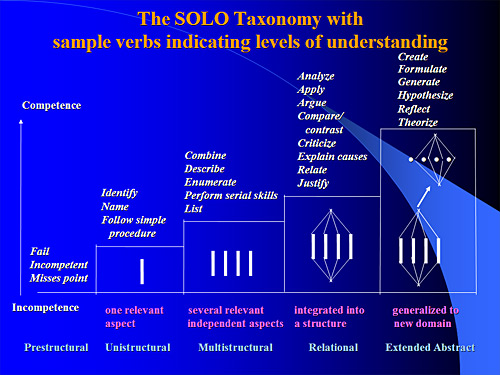
Frameworks that make cognitive next steps visible such as SOLO Taxonomy
Is learning deep?
- Do students know why they are learning what they are learning?
- Can they articulate how learning might be transferred beyond school?
- Is their learning connected?
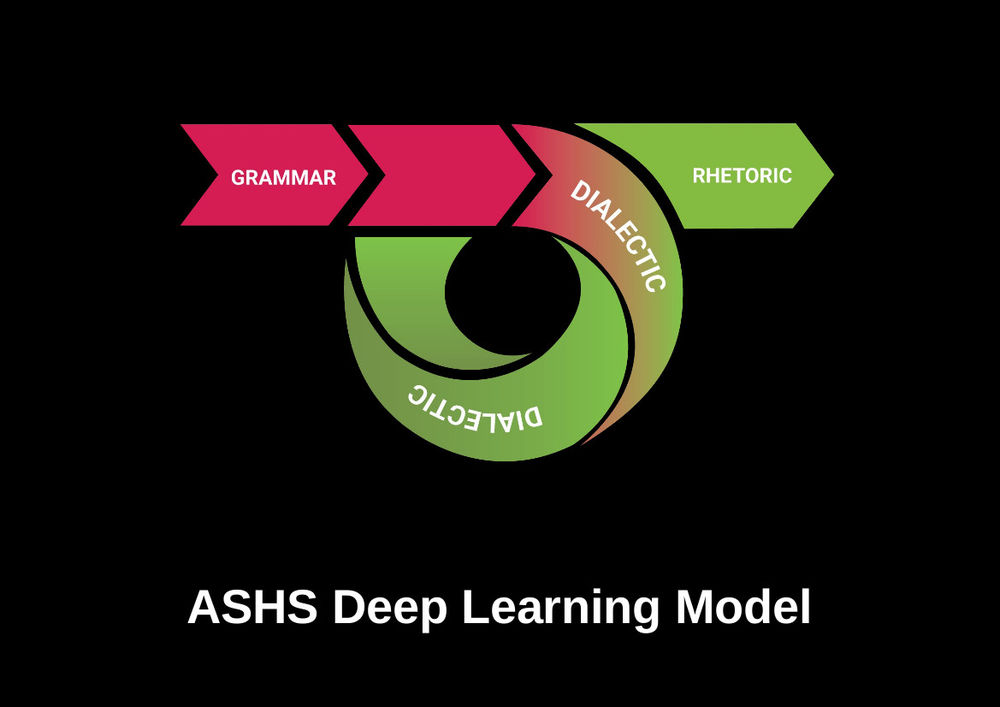
- Are they using the trivium model of learning to support deeper learning?
- Is there evidence of higher-order thinking skills?
Examples of practice included:
Evidence that the ASHS Deep Learning Model (Trivium) was being used
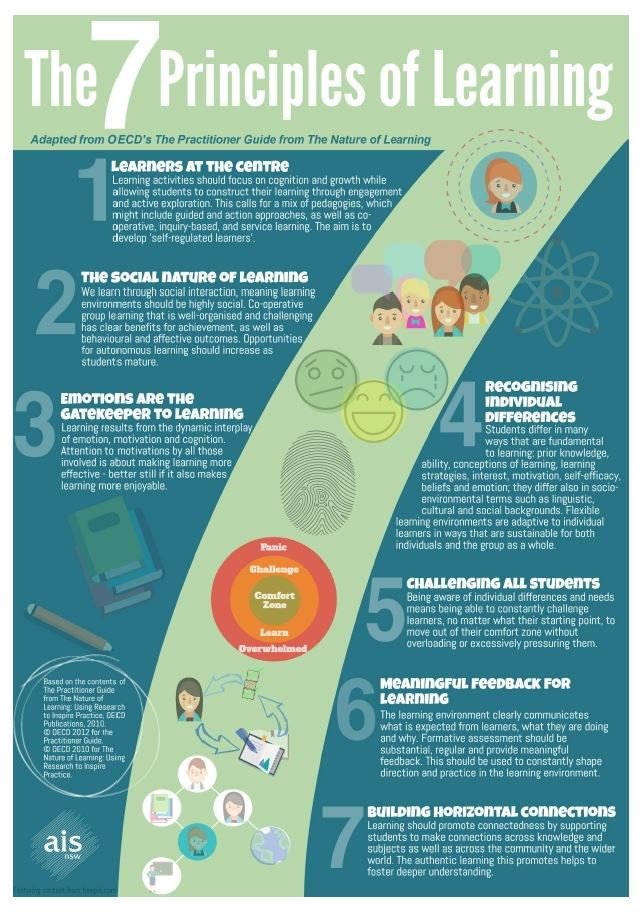
The (OECD) Seven Principles of Learning being evident
Is learning inclusive?
- Are there different modes for students to access learning?
- Are there different modes and strategies for students to process learning?
- Are there different modes and time frames for students to evidence learning and/or be assessed?
- Is there evidence of choice re: timing, assessments and topics?
Examples of practice included:
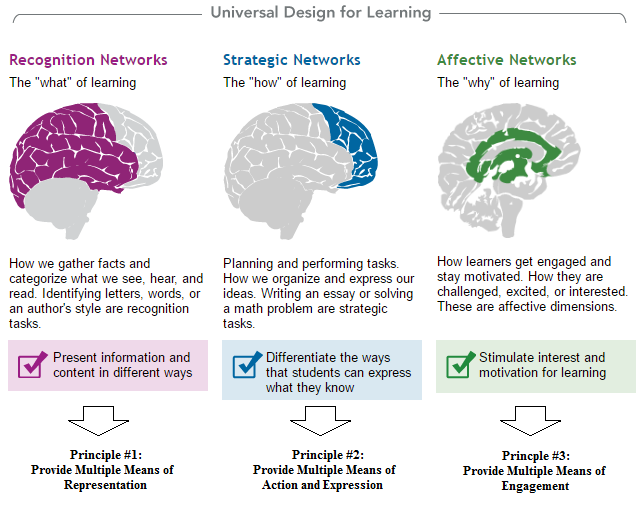
Evidence of Universal Design for Learning
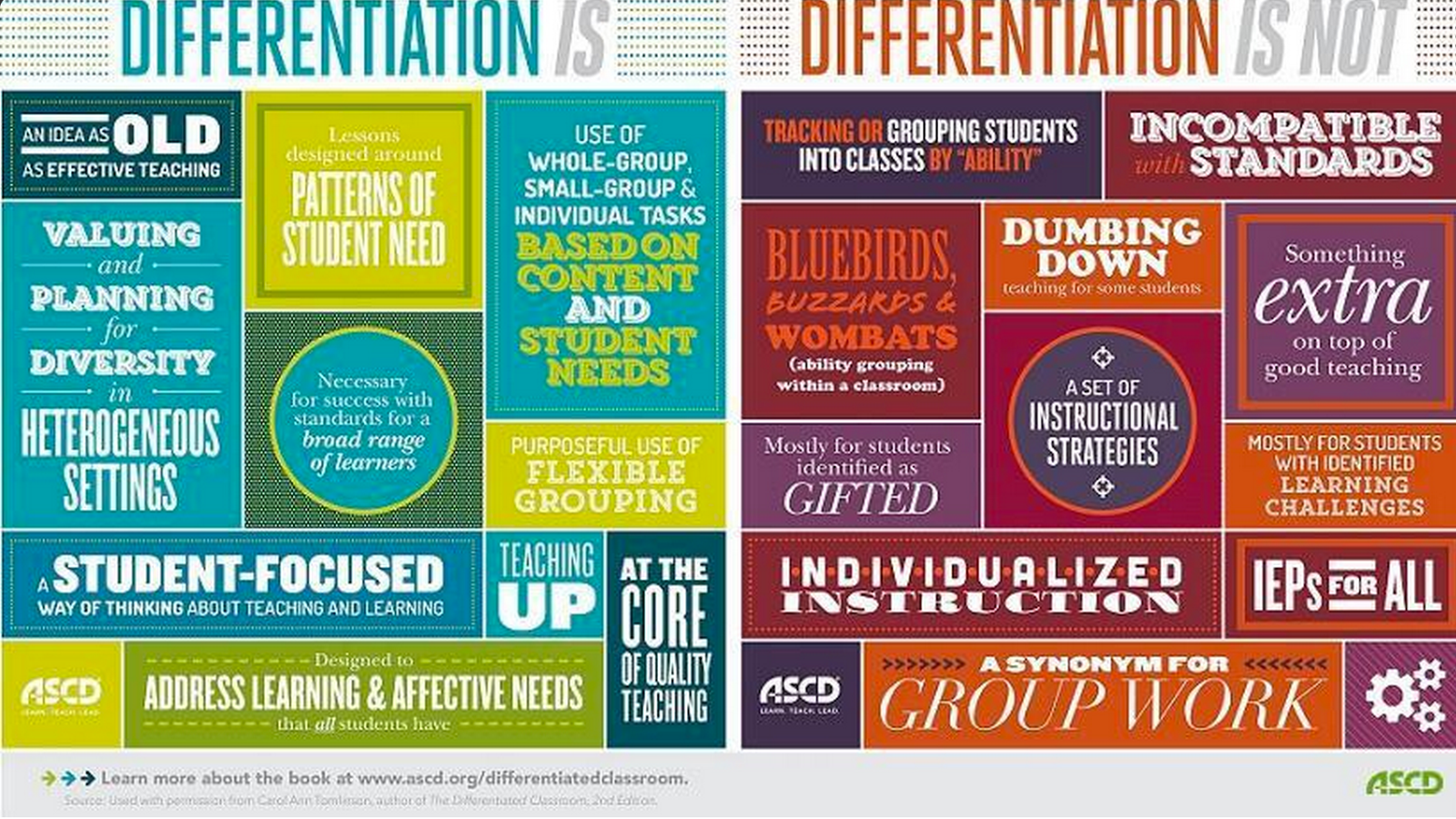
Or at least evidence of differentiation:
This was presented to the teaching staff as a presentation and as this summary document:

The teaching staff then had the opportunity to reflect on their own practice within the context of their own teaching. In groups they did a "quick and dirty" reflection spending 10 minutes using the following worksheets. The top row for capturing what they already do, the bottom row considering what they could be doing or doing more consistently.
So, what next?
I will be using this frame to gather evidence divided into 'Observations' and 'Opportunities' (for improvement and innovation). I have also encouraged anyone that wants to send through any of their own observations and opportunities as well. All of this will provide the basis for me to be able to work with the SLT to establish our priorities for 2019 and then plan for how we will work with the whole staff to develop and co-design strategic and then action plans for 2019 and beyond.
The ultimate aim being to lead meaningful and manageable change so as to ensure ASHS will always be a NEW school.
Will keep you posted how this all goes!
The following readings and resources were also shared:
Visible Learning
Deep Learning
Inclusive Learning
The 10 skills you need to thrive in the Fourth Industrial Revolution
The 10 skills you need to thrive in the Fourth Industrial Revolution

Image: REUTERS/Sergei Karpukhin
19 Jan 2016


Five years from now, over one-third of skills (35%) that are considered important in today’s workforce will have changed.
By 2020, the Fourth Industrial Revolution
will have brought us advanced robotics and autonomous transport,
artificial intelligence and machine learning, advanced materials,
biotechnology and genomics.
These developments will transform the way we live, and the way we
work. Some jobs will disappear, others will grow and jobs that don’t
even exist today will become commonplace. What is certain is that the
future workforce will need to align its skillset to keep pace.
A new Forum report, The Future of Jobs, looks at the employment, skills and workforce strategy for the future.
The report asked chief human resources and strategy officers from
leading global employers what the current shifts mean, specifically for
employment, skills and recruitment across industries and geographies.
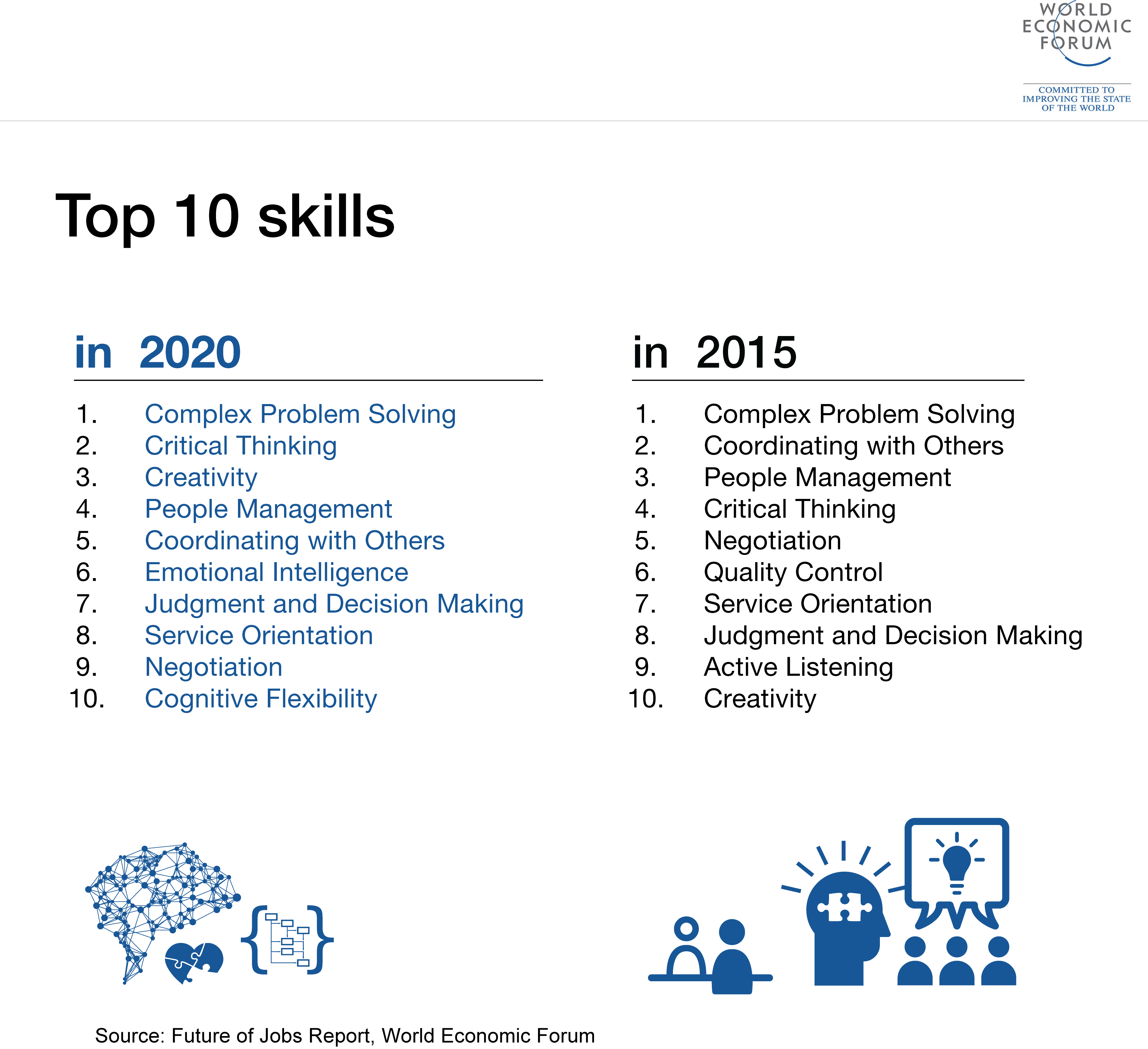
What skills will change most?
Creativity will become one of the top three skills workers will
need. With the avalanche of new products, new technologies and new ways
of working, workers are going to have to become more creative in order
to benefit from these changes.
Robots may help us get to where we want to be faster, but they can’t be as creative as humans (yet).
Whereas negotiation and flexibility are high on the list of skills
for 2015, in 2020 they will begin to drop from the top 10 as machines,
using masses of data, begin to make our decisions for us.
A survey done by the World Economic Forum’s Global Agenda Council
on the Future of Software and Society shows people expect artificial
intelligence machines to be part of a company’s board of directors by
2026.
Similarly, active listening, considered a core skill today, will
disappear completely from the top 10. Emotional intelligence, which
doesn’t feature in the top 10 today, will become one of the top skills
needed by all.
Disruption in industry
The nature of the change will depend very much on the industry
itself. Global media and entertainment, for example, has already seen a
great deal of change in the past five years.
The financial services and investment sector, however, has yet to
be radically transformed. Those working in sales and manufacturing will
need new skills, such as technological literacy.
Some advances are ahead of others. Mobile internet and cloud
technology are already impacting the way we work. Artificial
intelligence, 3D printing and advanced materials are still in their
early stages of use, but the pace of change will be fast.
Change won’t wait for us: business leaders, educators and
governments all need to be proactive in up-skilling and retraining
people so everyone can benefit from the Fourth Industrial Revolution.
The Annual Meeting is taking place in Davos from 20 to 23 January, under the theme “Mastering the Fourth Industrial Revolution”.
Tuesday, 31 July 2018

Leading Professional Learning and Development (PLD) with Purpose ~ U

| View this email in your browser |
|
||||||
|


Tuesday, 10 July 2018
10 Characteristics of Learner Centered Experiences
10 Characteristics of Learner Centered Experiences
 Education Reimagined defines the paradigm shift from teacher-centered to learner-centered as shifting how we see learners and their critical role in their own learning now, and throughout their lives. The critical shift is that “Learners are seen and known as wondrous, curious individuals with vast capabilities and limitless potential. This paradigm recognizes that learning is a lifelong pursuit and that our natural excitement and eagerness to discover and learn should be fostered throughout our lives, particularly in our earliest years.” When we focus on learners, connect to their interests, needs, and goals, we can create experiences that ignite curiosity, develop passion, and unleash genius. As I work with diverse educators and talk with students, there are common characteristics that always surface when people share powerful learning experiences. They often share experiences that are: personal, allow learners to exert agency, have goals and accountability, they are inquiry-based, collaborative, authentic, allow for productive struggle, provide and use models, ensure time for critique and revision as well as reflection.
As I think about some of the most impactful learning experiences in my own life, they align with the same characteristics that I hear from others. One of the most recent and definitely impactful learning experiences was the opportunity to participate in a TEDx event and do a talk along with some amazing friends and educators. My experience encompassed diverse opportunities for growth and empowered me to grow and learn significantly. Reflecting on my own learning and what others share with me regularly makes me think about the how we learn in schools and how critical it is to create the conditions that support learner-centered experiences in diverse classrooms.

Personal
In an effort to create more purpose and autonomy in schools, there is an increased focus on personalized learning. This is a good thing but it can also be overwhelming for those who are responsible for the outcomes to allow learners (educators and students) to learn in ways that meet their needs. Too often for the sake of “convenience” we standardize learning experiences that rarely meet the needs for all. Instead, personal learning connects to learner’s beliefs, strengths, experiences, and passions to start from where the learner is and move forward from the towards the desired learning goals.As I reflected on this and connected it to the TedX experience, I realized that what made it personal is that I got to choose the content and had the autonomy to organize the talk in a way that made sense to me. What is also important to note is that nobody else spent time making this a personalized learning experience for me. The goals were the same for all of us- 8 minutes to share your idea worth spreading. The difference was in the flexibility and resources to learn in ways that met our unique goals and needs. I had access to resources on public speaking to watch at my own pace and set milestones to reach along the way that directly related to developing and delivering the talks.
Agency
To support my learning I had access to an online course with a variety of modules. If there was a course that I wasn’t interested in or was not helpful at the moment, I skipped it and found additional resources that best helped me to meet my overall goal, not micromanaged to complete each and every task. Everything I learned was purposeful and related to growing my own expertise and confidence to be at my personal best and I was held accountable by an authentic task.What these experiences have continuously taught me is that we can’t control the learners and simultaneously expect them to be motivated without opportunities to exert agency in the learning process. Agency comes from the power to act and requires learners to have the ability to make decisions and take ownership of their own behaviors in the process. To close this gap in how we want to learn in schools will require changing how we design learning experiences for educators.
Goals + Accountability
From the time we finalized the speaker list to the event date, we had four weeks to prepare our talks and it was intense! We backwards mapped our plan from the date of the even and created a plan and strategic goals to be ready in time. I had weekly check-ins with coaches and assignments each week that were directly related to crafting the speech. At the end of the four weeks, I was accountable for delivering an 8-minute talk and my own level of accountability to bring my personal best far exceeded any external measures that anyone else could have placed on me.We often prioritize what we are held accountable and for this very reason accountability systems are set in place to check homework, take attendance and make sure that you taught the curriculum. This is where the accountability gets a bad rap. Often times because it is easier to measure, we hold people accountable for standardized tests, grades, and other data that is easy to capture yet often fail to set goals and hold others accountable for developing the skills that we say we actually care about like creative thinking, complex thinking and problem solving, communication, and innovation.
Inquiry-based
Inevitably, when learners are posing questions and seeking answers, they are more invested than if they are being told what to think or do. In my case it was, ‘What makes a great talk?’ and ‘How can I best organize and share my ideas?’ I was motivated read, watch, listen to a lot of different speakers to organize my ideas and develop the talk and the slides. When challenges are presented or learners can find their own to solve, they are often more intrinsically motivated to seek answers to questions that they are genuinely interested in figuring out.Collaboration
Although I was the only one on stage, this was far from an individual endeavor. I had to work with many people along the way that was critical to the process. I called on different individuals based on their strengths throughout the process. And at times, when I wasn’t ready I had a team that pulled me along and made sure that I was pushed to do my best. The face to face collaboration was important but I wasn’t limited by that as I could reach out to others in my network and learn from diverse individuals. Creating opportunities for learners to build on the strengths of others and work together allows for new and better ideas to emerge. When we are exposed to diverse ideas and perspectives, we grow in our own practice and impact others as well.Authentic
My excitement and anxiety about the event was fueled by the public accountability of my performance in front of people I really admire. Also, the fact that it was being recorded for anyone to see took it up a notch too. Having this experience reinforced the importance of creating opportunities for students to share their work beyond the classroom. Connecting students with experts, peers and other learners allow for a different level of accountability and authentic feedback than one gets from simply handing something into a teacher for a grade. Experiences, where learners get to solve a challenge that is meaningful and relevant to their context, can empower learners to take action and do something that matters to them and others.Critique + Revision
Over course of the four weeks, I had many, many iterations of my talk. The first ones were bad. Really bad. Thankfully, nobody was grading my first drafts and I had multiple opportunities for critique and revision. I had to push myself to practice in front of my peers, knowing it was far from perfect. Feedback, by nature, will unearth some things that need to improve and is not always easy to hear. But if we don’t create conditions where feedback is part of the process, how can we expect real growth in our learning?With each version that I shared it with my friends and family and coaches, it got better (never perfect). Instead of expecting the first draft to be the best, we need to realize that with time, clarity, critique and revision, we are capable of much more than we realize. When we raise our expectations and create the conditions to achieve those expectations, people will often go above and beyond. It is important to deliberately create the conditions where learners feel valued and can openly share challenges to grow and improve as a critical part of the learning process.
Productive Struggle
Creating an environment where learners are encouraged to take risks in pursuit of learning and growth rather than perfection is absolutely foundational to shifting practices. I know a lot of people have done these talks or some version of them and it’s not a big deal. I also had people tell me that is it would be their worst nightmare. It definitely was a step out of my comfort zone but within reach and I am thankful for the opportunity to push myself. This reminded me of one of my students in 7th grade who had just moved from the Philippines and his English was not very strong yet. I had assigned each student do a presentation and he wouldn’t do it. I could have tried to force him or I could have failed him but instead, I asked if he would be willing to share his presentation with me and a friend. He thought about it and agreed. This was the right amount of struggle for him and a safe learning environment, whereas the for the others it was in front of the class and in other venues. The learning task has to be within the right zone and allow for a productive struggle or some learners will shut down if they feel it is too far out of reach, even if you threaten them with a failing grade. This also means that the right task or product will likely be different based on the learners in the class.Models
While I was preparing for my talk I watched a lot of TED Talks. They helped me see how great speakers put their stories together, how to craft their slide deck, and how they connect with their audience. Each time I watched, I had a different focus depending on where I was as a learner. Models are so powerful in the learning process but so often in school, we have this fear of copying or cheating. There is a lot of talk about creating rather than consuming but to create something better, I relied on models to inspire new ideas, build off of and stimulate my own thinking and creativity. No matter how much I loved Brene Brown or Simon Sinek’s talk, I couldn’t copy them but they did inspire me in a lot of ways. If an assignment has only one right answer or final product, maybe there are some opportunities for it to be revised.Reflection
Reflection is often the forgotten part of the learning process, in a fast moving world, taking time to pause and reflect can easily get cut when we lack time but it is often the most valuable part of the learning process. I videotaped myself and although this was painful and I hated every minute of watching it, it helped me see what I looked like and sounded like and reflect on where I could improve. Taking in what I had learned from others, the feedback I received and figuring out how to make the changes in my own way, was critical to my growth.I would love to hear your thoughts and ideas on the 10 characteristics. What am I missing? What could be revised?
Subscribe to:
Posts (Atom)